 コンテンツにスキップ
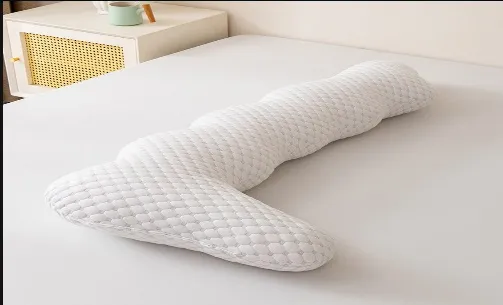


Article Summary:
A メモリーフォーム コンタゥア ネック サポート 枕 is commonly considered to be a beneficial sleep aid for improving the cervical spine’s alignment, reducing neck pain, and enhancing the overall quality of sleep.
The documented research in sleep ergonomics and muscular health, including the Principles and Practice of Sleep Medicine (Kryger et al.), ergonomics for Therapists (McGill), and biomechanical studies in the Journal of Physical Therapy Science– proper pillow design is critical to maintaining a neutral position in the cervical region during sleep.
This article provides a comprehensive, industry-oriented description of how to choose the best Memory Foam Contour Neck Support Pillow. It analyzes the material science, ergonomic principles, anthropometric data, performance metrics, manufacturing quality, and long-term stability.
Referenced literature and sources:
- Kryger, M. H., Roth, T., & Dement, W. C., Principles and Practice of Sleep Medicine, Elsevier
- McGill, S. M., Low Back Disorders & Ergonomics, Human Kinetics
- Journal of Physical Therapy Science – Cervical spine alignment studies
- ISO 9001 & ISO 10993 (material safety references)
Why Neck Support Pillows Matter More Than Ever?
Today’s lifestyle places a tremendous burden on the cervical spine. The prolonged use of a screen, stationary work patterns, and stress-related muscular tension have all contributed to the increased prevalence of neck pain, stiffness, and sleep issues, specifically in the elderly.
In this context, the Memory Foam Contour Neck Support Pillow has become a popular product that is used by people on a variety of levels. Contrast with the traditional pillow, the contour pillow is designed to actively assist with the natural slope of the neck, rather than simply provide cushioning.
From a commercial perspective, demand is fueled by:
- Increased health knowledge
- Older populations
The increase in popularity of ergonomic and health-focused products in the home.
Understanding the proper product selection is crucial to both consumers and manufacturers.
What Is a Memory Foam Contour Neck Support Pillow?
A Memory Foam Contour Neck Support Pillow is a pillow that is specifically designed to maintain the neutrality of the cervical spine while sleeping.
Key attributes that define this class:
- Contoured surface that elevates the cervical region
- Pressure-sensitive memory foam nucleus
- Different elevation profiles for sleepers of different types
Contrasting with flat pillows, contour designs seek to reduce the compensation of muscular tissue by supporting the neck’s lordotic shape.

The Science Behind Memory Foam and Cervical Support
The viscoelastic properties of memory foam are
Memory foam’s both flammable and malleable behavior is apparent; these properties allow it to:
- Respond to body temperature changes
- Satisfy the requirements of anatomical structure
- Compensate for pressure differences evenly
This viscoelastic response that is viscoelastic is of great importance in reducing the pressure that is localized to the cervical spine and surrounding muscles.
The alignment of the cervical spine is based on several principles.
The biomechanics of sleep are optimal, which maintains the following:
- Neutral head position
- Even the distribution of loads
- Minimal lateral deviation or rotation
A proper design of the Memory Foam Contour Neck Support Pillow adheres to these principles over time.
Contour Design: More Than Just Shape
Contour pillows are not characterized by a single shape. Effective design of the contour considers several factors:
The degree to which the cervix is incurved
Shoulder width allowance
The position of the head’s cradle.
Poorly conceived pillows that are contoured can overextend or undersupport the neck, this can lead to pain.
Professional-quality designs are created using anthropometric information, not aesthetic principles.
Matching Pillow Design to Sleeping Position
Sleepers on the Back
Sleepers who return to their bed every night require:
- Elevated neck position
- Minimal head deviation
- A Memory Foam Contour Neck Support for sleepers who typically sleep on their backs typically has a lower rachis.
- Sleepers on the Side
Side sleepers have requirements:
- A higher ceiling to cover the gap between the shoulder and the head
- Constant lateral assistance
Dual-height pillows are frequently employed to take advantage of both positions.
Pillow Height (Loft): A Critical Selection Factor
Incorrect pillow placement is one of the most frequent causes of client dissatisfaction.
Key factors that should be considered include:
- The user’s shoulder width
- The firmness of the mattress
- preferred sleeping position
A high-end Memory Foam Contour Neck Support Pillow will often have multiple height options or reversible configurations.
Density and Firmness of Memory Foam
Memory foam density affects:
- Support level
- 耐久性
- Response speed
Higher-density foam generally provides better cervical support and longer lifespan, though excessive firmness may reduce comfort.
Temperature Sensitivity and Breathability
One drawback of traditional memory foam is its heat retention.
Innovative designs attempt to address this issue through:
- Open-cell foam structures
- Cores that are ventilated
- ジェル入りメモリーフォーム
For those who shop professionally, thermal comfort is a significant differentiator in the positioning of products.
Cover Materials and Skin Contact Safety
The pillow cover plays a significant role in comfort and hygiene.
Preferred materials include:
- Bamboo-derived viscose
- Tencel™ blends
- High-thread-count cotton
From a compliance perspective, materials should meet relevant safety and skin-contact standards.
Durability and Shape Retention
A Memory Foam Contour Neck Support Pillow must have its shape preserved under repeated stress.
Indicators of quality that are commonly used include:
- Completely stop the flow of blood through the injury
- Recovering time uniformity
- Steady state
Low-quality foam is often unable to maintain its shape over time.
Comparison Table: Key Evaluation Criteria
| Evaluation Factor | Low-Quality Pillow | High-Quality Pillow |
| Foam Density | 低い | Medium–High |
| Contour Accuracy | Generic | Ergonomically engineered |
| Temperature Control | Poor | Enhanced airflow or gel |
| Shape Retention | Short-term | Long-term |
| Neck Support | Inconsistent | Stable and targeted |
Health Claims vs. Evidence-Based Benefits
Many products claim to relieve pain or cure sleep disorders. From an industry standpoint, responsible positioning focuses on:
- Supporting natural alignment
- Reducing strain
- Improving comfort consistency
Evidence supports symptom relief, not medical treatment.
Manufacturing Quality and Process Control
High-quality Memory Foam Contour Neck Support Pillows are created by:
- Controlled processes for the foam’s curing
- Precise techniques for molding
- Density and resilience quality inspection
ISO 9001-certified manufacturing is often a prerequisite for B2B buyers.
Odor Control and Off-Gassing Considerations
New memory foam products may emit temporary odors.
Premium manufacturers minimize this through:
- Extended curing
- Low-VOC raw materials
- Ventilation testing
This factor directly affects user perception and product reviews.
Application Scenarios and User Profiles
Common users include:
- Office employees with neck pain
- Seniors who have decreased mobility in the cervical region
- Sleepers on both sides and back who want to have support
Understanding the target demographic’s demographics helps to direct the selection of products.
Packaging, Storage, and Logistics Considerations
From a supply-chain perspective:
- Compression packaging reduces shipping volume
- Foam recovery performance must remain intact
- Moisture protection is essential
Packaging design affects both cost efficiency and product integrity.
Sustainability and Environmental Impact
Sustainability considerations include:
- Foam lifespan
- Recyclability challenges
- Use of certified low-emission materials
Longer-lasting pillows contribute to reduced waste.
Common Mistakes When Choosing a Neck Support Pillow
Selecting height based on appearance
Ignoring sleeping position
Overvaluing softness over support
Assuming all memory foam performs equally
Avoiding these mistakes significantly improves user satisfaction.
How to Evaluate a Memory Foam Contour Neck Support Pillow Professionally?
Professional evaluation includes:
- Trial under real sleep conditions
- Pressure mapping (for R&D)
- User feedback over extended use
These criteria are critical for product development and sourcing.
Comparison Table: Memory Foam vs. Traditional Pillows
| 特徴 | Memory Foam Contour Pillow | Traditional Pillow |
| Neck Support | Targeted | 限定 |
| 圧力リリーフ | 高い | 中程度 |
| Shape Retention | Strong | Weak |
| 人間工学に基づいたデザイン | Yes | No |
FAQ: Memory Foam Contour Neck Support Pillow
Q1: What is the purpose of the Memory Foam Contour Neck Support?
It’s a pillow that is shaped ergonomically and is intended to support the cervical spine via pressure-induced memory foam.
Q2: Who is responsible for using this style of pillow?
It’s appropriate for both back and side sleepers, particularly those who have neck pain or poor sleeping habits.
Q3: How long does a memory foam pillow with a contour design last?
High-quality models typically have a lifespan of 2-4 years with proper maintenance.
Q4: Is it appropriate for all sleeping positions?
Many designs facilitate sleeping back and sideways, but stomach sleepers may need different approaches.
Q5: Is firmness more important than softness?
Yes. The corrective action of cervical support is more dependent on its firmness and accuracy than it is on its softness alone.
結論
Selecting the most beneficial Memory Foam Contour Neck Support Pillow is more complex than simply testing the comfort of the pillow. It necessitates an understanding of the biomechanics of the cervix, the performance of materials, the design of ergonomics, and the long-term stability of materials.
For brands, manufacturers, and dedicated consumers, treating the pillow as a functional system for sleeping instead of a soft fabric leads to increased product performance, enhanced market standing, and increased user satisfaction.
 Japanese
  English
  French
  German
  Korean
  Latvian
  Russian
  Spanish
  Arabic
  Dutch
Dutch  Ukrainian